6-Max Poker GTO Strategy Preflop Ranges, Position, Aggression & Exploits
6-max No-Limit Hold'em rewards players who understand position and can play wide ranges without losing structure. You cannot wait for premiums, but “play loose and aggressive” is not enough. A strong strategy connects disciplined preflop ranges with board-aware postflop aggression.
What Changes in 6-Max Poker?
With only six seats, every position reaches the blinds more quickly and opening ranges are wider than in a traditional full-ring game. CO, BTN and SB become especially important because stealing blinds and playing positional pots form a large part of your long-term win rate.
The result is more 3-betting, more blind defence and more postflop play with non-premium hands. Strong 6-max strategy is therefore less about waiting for clear value and more about navigating wide ranges accurately.
1. Preflop Position Is the Foundation
UTG should still contain a relatively strong range because five players remain behind. As positions fold, opening ranges can widen. The Button gets to apply the most pressure because it will have position postflop against both blinds.
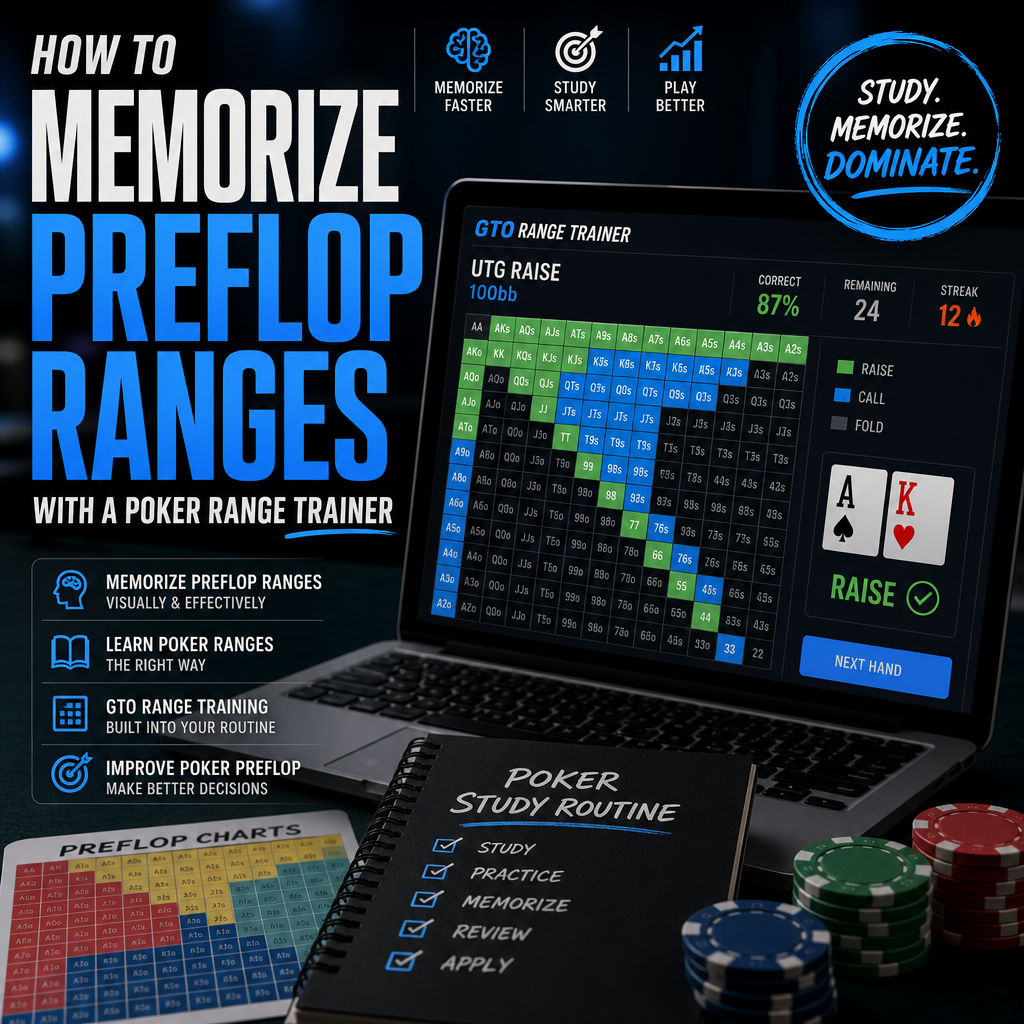
Instead of trying to memorise all 169 hand classes at once, learn the shape of each range. Start with premiums and strong Broadway hands, then see where suited aces, suited connectors, weaker offsuit Broadways and small pairs enter as position improves.
Our Poker Preflop Charts beginner guide explains how to read these grids, while the Free GTO Charts page gives you ranges to start practising.
2. 3-Betting: Position and Rake Matter
A good 3-bet range is not simply “premium hands plus random bluffs.” Some positions use a more polar structure, while others 3-bet a more linear range. Rake also changes how attractive calling becomes, which can push more hands toward raising or folding.
- BTN vs CO: ranges are wide and positional pressure is high.
- SB vs BTN: playing out of position makes calling less attractive, so 3-betting becomes strategically important.
- BB vs BTN: the BB has a calling option because it closes the action preflop and receives strong pot odds.
- Early vs early: ranges are tighter, so 3-bets contain much more raw strength.
3. Blind Defence Is Where Many 6-Max Players Leak
Because BTN and SB opens are wide, the BB cannot wait for premium hands. At the same time, blindly defending every suited hand can be expensive under real rake. Good defence balances pot odds, equity realisation and how well a hand can continue on future streets.
This is one of the best areas to study because it repeats constantly. A small improvement in BTN vs BB strategy can matter more than perfect knowledge of rare four-bet river nodes.
4. C-Betting Should Follow the Board, Not Habit
Old-school advice often reduced 6-max postflop strategy to “be aggressive.” Modern solver work is much more specific. Some boards favour frequent small bets; some require substantial checking; others support polar large bets.
| Board Feature | Typical Strategic Question |
|---|---|
| Dry high-card | Does the preflop raiser own a large range advantage that supports a small range bet? |
| Low connected | Does the caller have more two-pair, sets and straight interaction? |
| Paired | Which player has more trips, and how static is the equity distribution? |
| Monotone | Who owns the nut-flush advantage and which blocker hands can bluff? |
| Broadway dynamic | How does nut advantage affect larger bet sizes and check-raises? |
5. Turn and River Strategy: Stop Autopiloting
The flop is only the first part of the tree. Many 6-max leaks appear after a flop c-bet: barreling the wrong turns, failing to value-bet thinly, or arriving on rivers with too few bluffs.
A useful study habit is to ask what each turn changes. Does it improve the caller’s range? Complete obvious draws? Give the aggressor more nut combinations? Create a natural overbet? Turn cards that shift range advantage often change both bet frequency and size.
6. GTO Baseline, Then Exploit the Pool
Once your baseline is stable, exploit population leaks. Many lower- and mid-stakes players defend blinds too tightly, under-check-raise certain flops, or underbluff large river lines. Those tendencies can justify opening wider, c-betting more selectively, or making disciplined overfolds.
Read GTO vs Exploitative Poker for a fuller framework on deciding when a deviation is justified.
A Simple 6-Max Study Plan
- Memorise RFI shapes by position.
- Study BTN vs BB and SB vs BB before obscure spots.
- Add common 3-bet pots: BTN vs CO and BB vs BTN.
- Bucket flops by texture and learn the broad c-bet pattern.
- Review your biggest pots and repeated mistakes weekly.
- Use a trainer to turn passive study into active recall.
Build Your 6-Max Baseline
Start with GTOCharts for fast preflop references, then use GTO Wizard when you want full postflop solutions, drills and hand-history analysis.
Browse Free 6-Max Charts Study with GTO Wizard